The Enduring Legend of the F-4 Phantom and Its Daring Jolly Roger Pilots
From the vast, blue expanse of the Pacific to the challenging skies over Southeast Asia, few aircraft command as much respect and awe as the McDonnell Douglas F-4 Phantom II. Yet, even fewer evoke the same blend of daring spirit and combat prowess as those adorned with the iconic skull and crossbones – the legendary Jolly Rogers. These squadrons, and the extraordinary individuals who mastered the art of
flying jolly roger, etched an indelible mark on aviation history, embodying courage, skill, and an unwavering commitment to their missions. This article delves into the Phantom's illustrious career, the valiant pilots who flew it, and the enduring symbolism that continues to captivate enthusiasts worldwide.
The Unmistakable Roar: The F-4 Phantom's Enduring Legacy
The F-4 Phantom II was more than just an aircraft; it was a testament to raw power and versatile engineering. A twin-engine, two-seat, all-weather, supersonic interceptor and fighter-bomber, the Phantom was designed for sheer performance. Its robust airframe and impressive capabilities quickly made it the backbone of naval and air forces across the Western world. Revered by all who flew it, the classic F-4 served with distinction, proving its mettle in various roles, from air superiority fighter to ground-attack platform and reconnaissance asset.
Introduced in the early 1960s, the F-4's formidable presence was immediately felt. Its distinct upward-canted wingtips and downward-canted tailplanes gave it an unmistakable silhouette. Pilots appreciated its ruggedness and incredible power, which allowed it to carry a vast array of ordnance and maintain supersonic speeds. For those who were truly adept at
flying jolly roger, the Phantom was an extension of their will, a powerful beast tamed and directed with precision. Its participation in numerous conflicts, particularly the Vietnam War, solidified its legendary status, showcasing its ability to take hits and return home, often after delivering decisive blows to the enemy. The F-4’s enduring design meant it was continually upgraded and adapted, a true workhorse that remained at the forefront of military aviation for decades, a testament to its original brilliant engineering.
Aces of the Jolly Roger: Legends in the Sky
The true heart of the F-4 Phantom’s legend lies with the exceptional men who piloted it, especially those associated with the formidable "Jolly Rogers" squadrons like VF-84. These were pilots who didn't just fly; they dominated the skies, pushing the limits of both man and machine. Their stories are not merely tales of combat but testaments to relentless training, courage under fire, and unparalleled skill in
flying jolly roger.
Among the pantheon of these legendary figures are three names that resonate deeply within aviation circles:
*
Major General Marion Carl: A true aviation pioneer, Marion Carl’s career spanned eras. He was one of the few VMF-221 Wildcat pilots to survive the climactic Battle of Midway and emerged as the first Marine Fighter Ace of WWII, accumulating 18.5 victories. His connection to the F-4 Phantom was equally profound. He logged 490 hours in the aircraft, conducting critical combat reconnaissance flights over Red China. Uniquely, as a General commanding air wings in Vietnam and later at Cherry Point, he regularly continued to fly the F-4, a rare and inspiring example of a senior officer maintaining hands-on operational experience. His career demonstrates a lifelong dedication to military aviation, transitioning from propeller-driven fighters to the cutting-edge jet age, consistently proving his mastery in the cockpit.
*
Commander Randy Cunningham: Joining the Navy in 1966, Randy Cunningham quickly made his mark. With VF-96, flying the F-4 Phantom in Vietnam, he achieved the distinction of becoming the first Navy Fighter Ace of the conflict. His exceptional prowess earned him a place as one of the most highly decorated aces of the war. Cunningham's insights and combat experience were invaluable, leading him to later assume command of the elite Navy Adversary Squadron of the Miramar Top Gun program. Here, he trained future generations of fighter pilots, imparting the critical lessons learned from fierce air-to-air engagements, ensuring that the skills required for
Flying the Jolly Roger: A Tribute to F-4 Phantom Aces would continue to be honed and perfected.
*
Colonel Manfred Rietsch: Colonel Rietsch’s career also began in 1966 with the US Marine Corps, leading him to VMFA-513 in Vietnam. Experiencing his first combat in 1968, he would go on to set an incredible record, flying an astonishing 653 combat missions in the F-4 Phantom – more than any other F-4 pilot in Vietnam. This sheer volume of operational flying speaks volumes about his dedication and endurance. His commitment to service continued well beyond the F-4, as he later flew 66 combat missions in the F/A-18 during Desert Storm, demonstrating a profound and lengthy impact on modern military aviation.
These pilots, each with their distinct achievements, collectively represent the pinnacle of military aviation. Their experiences underscore the immense skill, courage, and mental fortitude required to operate the F-4 Phantom in hostile environments, truly embodying the spirit of
flying jolly roger in its most impactful form.
Beyond the Cockpit: The Symbolism of the Skull and Crossbones
The allure of the Jolly Roger extends far beyond the aircraft and the pilots; it's a powerful symbol steeped in history and meaning. Originating from the flags of daring pirates, the skull and crossbones motif found a new home and a renewed sense of purpose within naval aviation. Squadrons like VF-17 (WWII), VF-84 (Vietnam era), and later VF-103/VFA-103 proudly displayed this emblem, signifying an aggressive, no-quarter approach to aerial combat.
For these elite units, the Jolly Roger wasn't just a badge; it was a statement. It represented defiance, an unspoken warning to adversaries, and a deep sense of camaraderie and elite status among those who wore it. This iconic imagery has permeated popular culture, becoming synonymous with top-tier fighter pilots and daring aerial maneuvers.
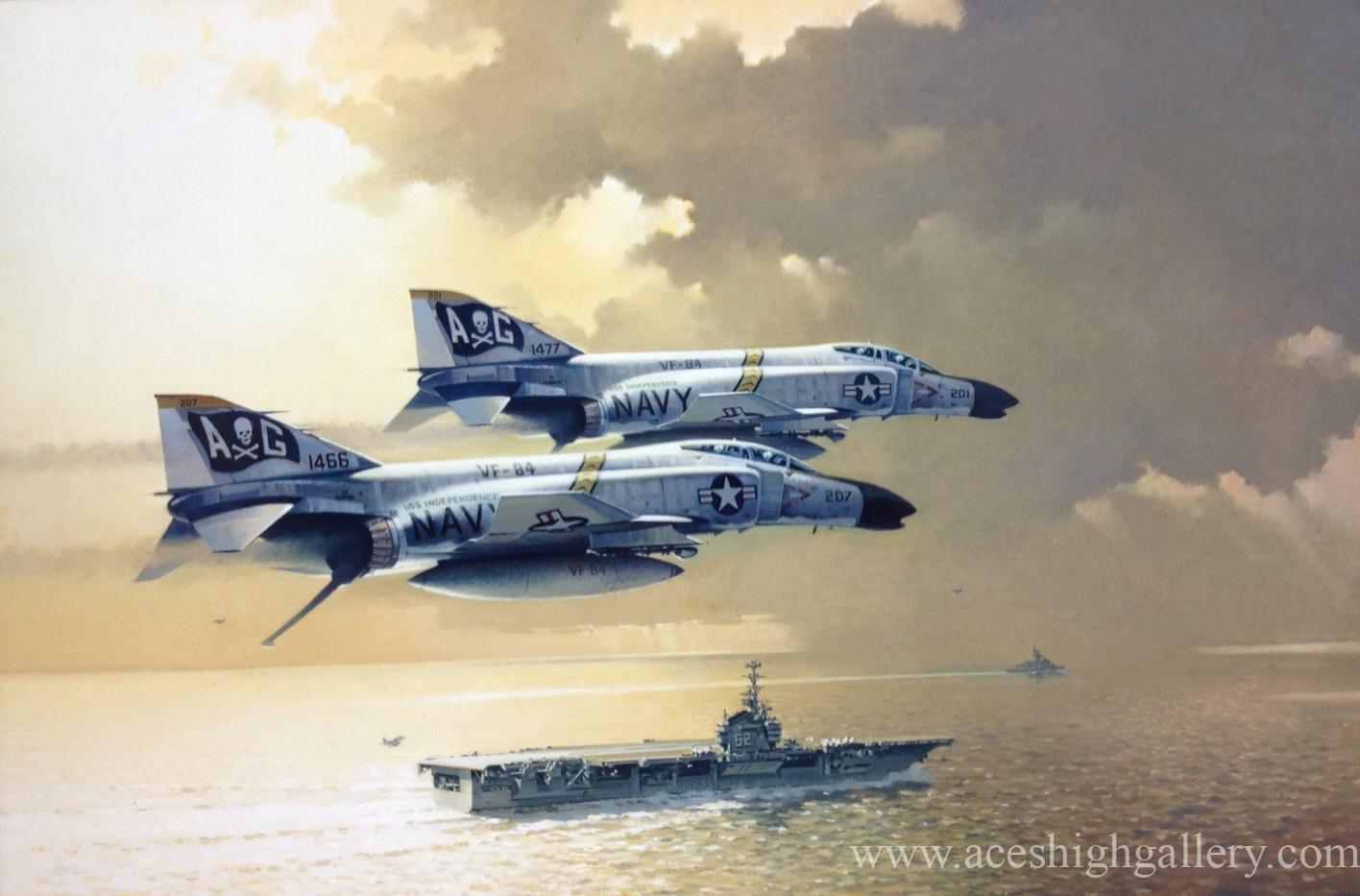
The enduring legacy of the Jolly Rogers is also beautifully captured in art. Robert Watts' superb print edition, "Flying the Jolly Roger," offers a spectacular view of F-4s preparing for recovery aboard the USS Independence against a stunning Yankee Station sundown. This award-winning piece, celebrated at the American Society of Aviation Artists annual exhibition, is more than just a painting; it's a tribute. Each print is made even more special by the authentic signatures of the legendary pilots themselves: Major General Marion Carl, Commander Randy Cunningham, and Colonel Manfred Rietsch. This fusion of art and history makes it an invaluable collector's item, reminding enthusiasts of the skill and courage involved in
Jolly Roger Legacy: F-4 Phantoms, Aces, and Flying Badges.
Furthermore, the symbolism is carried forward in tangible forms like "Jolly Roger Flying Badges." These high-quality embroidery badges are not merely decorative but serve a practical purpose for military personnel, explorers, and those involved in outdoor, survival, police, or tactical operations. They represent a connection to a proud tradition of excellence and a visual nod to the daring spirit of the Phantom pilots. The presence of such memorabilia allows the spirit of
flying jolly roger to persist, inspiring new generations and honoring the past.
Conclusion
The F-4 Phantom II, with its thunderous roar and formidable presence, undeniably carved its place in aviation history. But it is the extraordinary men, the Jolly Roger pilots, who truly infused the aircraft with legendary status. Their daring exploits, unparalleled skill, and unwavering courage transformed mere flights into tales of heroism, defining what it meant to excel in aerial combat. From Marion Carl's pioneering reconnaissance to Randy Cunningham's Vietnam ace status and Manfred Rietsch's record-setting missions, their collective legacy is a testament to the human spirit's ability to master complex machinery and perform under extreme pressure. The enduring symbol of the skull and crossbones continues to encapsulate this spirit, reminding us of a golden era of military aviation and the incredible individuals who truly mastered the art of
flying jolly roger. Their stories continue to inspire, ensuring that the legacy of the Phantom and its aces will never fade.