The roar of a jet engine, the glint of sun on a silver wing, and the unmistakable sight of a skull and crossbones emblazoned on the tail. For generations of aviation enthusiasts and military personnel, this imagery evokes a powerful legacy: the F-4 Phantom II flown by the legendary VF-84 'Jolly Rogers.' The phrase flying jolly roger transcends mere flight; it represents a bold spirit, unparalleled skill, and a history etched in the annals of air combat. This article pays tribute to the iconic F-4 Phantom and the ace pilots who embodied the daring spirit of the Jolly Rogers.
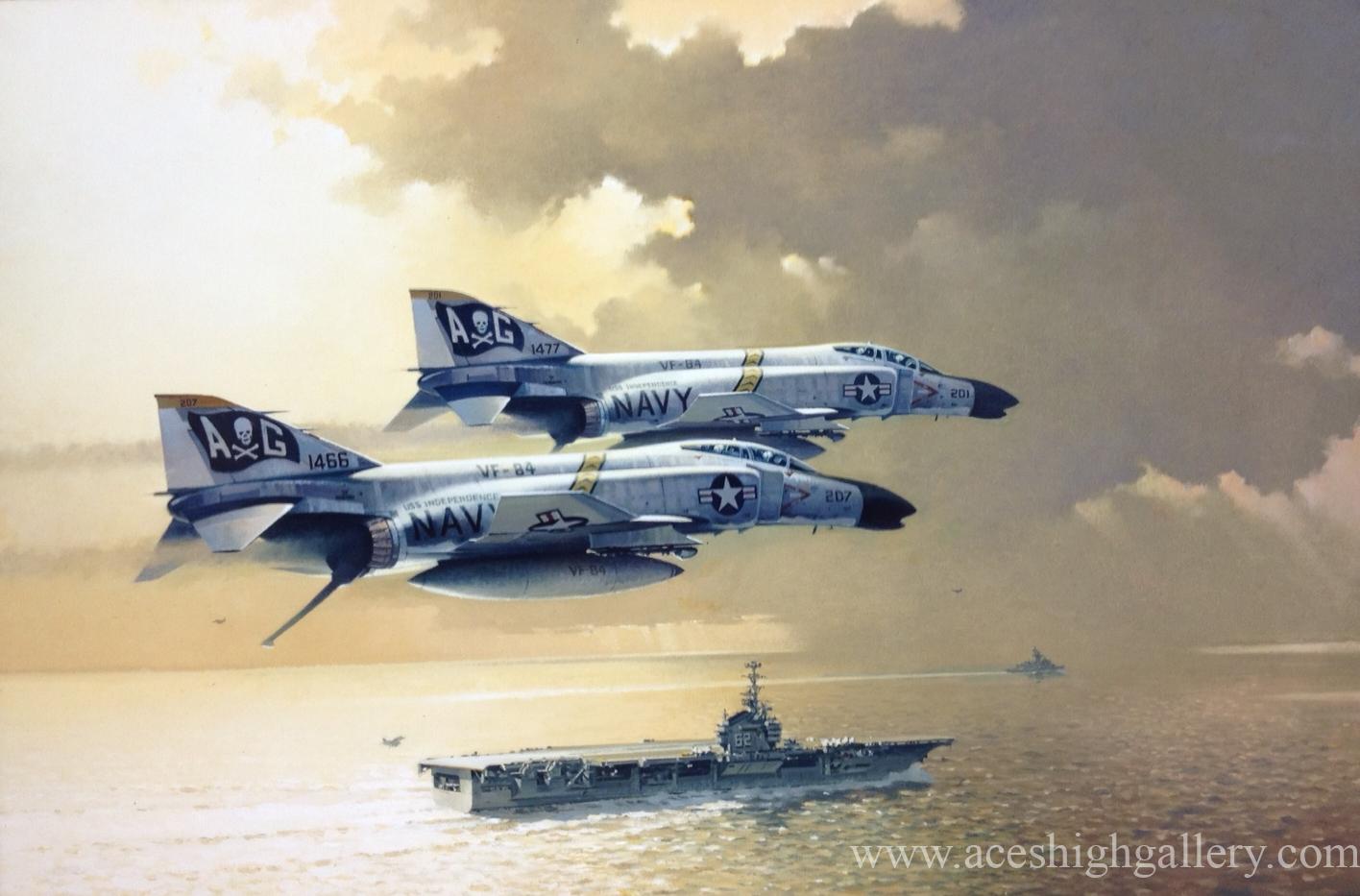
Imagine the scene: a breathtaking sunset over Yankee Station in 1965, the vast expanse of the South China Sea reflecting the dying light. Two F-4 Phantoms, their sleek forms cutting through the air, decelerate in preparation for a precision deck landing aboard the aircraft carrier USS Independence. Fresh from a combat mission, these warriors of the sky carried not only the weight of their mission but also the iconic skull and crossbones insignia of VF-84, signifying their elite status. This evocative moment, immortalized in Robert Watts’ award-winning aviation art piece, "Flying the Jolly Roger," captures the essence of an era when naval air power reigned supreme and courage was tested daily.
The Iconic VF-84: Phantom's Roar and the Skull and Crossbones
VF-84, affectionately known as 'The Jolly Rogers,' was more than just a fighter squadron; it was a symbol of aggressive air-to-air prowess and unwavering dedication. Their distinctive tail art, the menacing skull and crossbones, became one of the most recognized and revered insignias in naval aviation history. When pilots were flying jolly roger, they weren't just maneuvering an aircraft; they were upholding a fearsome reputation forged by generations of combat excellence.
The context of their operations, particularly during the Vietnam War, speaks volumes. 'Yankee Station' was the operational area in the Gulf of Tonkin from which U.S. Navy aircraft launched strikes against North Vietnam. Carrier operations were inherently dangerous, demanding extraordinary skill for takeoff and landing, especially after strenuous combat missions. The F-4 Phantom, with its powerful engines and robust airframe, was the perfect platform for these demanding tasks, serving as both an interceptor and a fighter-bomber. The challenges faced by these pilots, from navigating hostile airspace to executing flawless carrier traps, underscore the incredible fortitude required to be a part of such an elite unit. For deeper insights into these remarkable individuals, you can read more about the Legendary F-4 Phantom Pilots: Stories Behind the Jolly Roger.
The F-4 Phantom: A Global Legend of the Skies
Revered by every pilot who strapped into its cockpit, the McDonnell Douglas F-4 Phantom II carved an indelible mark in aviation history. This legendary aircraft served the navies and air forces of more Western world countries than any other combat jet, a testament to its unparalleled versatility and rugged reliability. From its maiden flight in 1958, the F-4 evolved into a true multi-role platform, excelling as a long-range interceptor, a formidable air superiority fighter, and a devastating ground-attack aircraft. Its brute force earned it nicknames like "Rhino" and "The World's Leading Distributor of MiG Parts."
With its impressive speed (Mach 2.2), long range, and heavy weapons payload, the F-4 was a game-changer. It carried a diverse arsenal, including AIM-7 Sparrow, AIM-9 Sidewinder missiles, and later, an internal 20mm M61 Vulcan cannon. The F-4's two-man crew configuration – a pilot and a Weapon Systems Officer (WSO) – allowed for highly effective teamwork in complex air combat scenarios, particularly for radar-guided missile engagements. The Phantom’s global deployment, from the U.S. to Germany, Japan, Israel, and beyond, cemented its status not just as a combat aircraft, but as a symbol of Cold War air power. The enduring spirit of flying jolly roger, representing daring and technical prowess, found its perfect embodiment in this magnificent machine.
Aces of the Jolly Roger: Legends Forged in Combat
The true essence of flying jolly roger is best exemplified by the extraordinary pilots who pushed the F-4 to its limits and emerged victorious against overwhelming odds. The signatures on Robert Watts' acclaimed print are a collector's dream, representing a direct link to aviation history and the incredible feats of these aces:
- Major General Marion Carl: A true aviation pioneer, Marion Carl’s career spanned multiple conflicts and aircraft types. He was one of the few VMF-221 Wildcat pilots to survive the climactic Battle of Midway, becoming the first Marine Fighter Ace of World War II with 18.5 victories. His connection to the F-4 Phantom is equally impressive: he accumulated 490 hours in the Phantom I, flying combat reconnaissance flights over Red China. Later, commanding air wings in Vietnam and at Cherry Point, he regularly flew the F-4, a rare feat for a General Officer. His legacy is one of continuous service, adaptability, and unwavering courage across vastly different eras of air combat.
- Commander Randy Cunningham: Joining the Navy in 1966, Randy Cunningham quickly made his mark. Flying the F-4 Phantom with VF-96 in Vietnam, he became the first U.S. Navy Fighter Ace of the conflict. His incredible skill and tactical brilliance earned him the distinction of being one of the most highly decorated Aces of the war. Post-Vietnam, Cunningham continued to shape naval aviation, assuming command of the elite Navy Adversary Squadron within the prestigious Miramar Top Gun program. His contribution to refining air combat tactics and training future generations of fighter pilots is invaluable.
- Colonel Manfred Rietsch: A Marine Corps aviator through and through, Manfred Rietsch joined in 1966 and soon found himself with VMFA-513 in Vietnam. Experiencing his first combat in 1968 while flying jolly roger-emblazoned F-4s, he went on to fly an astonishing 653 combat missions – more than any other F-4 pilot in Vietnam. But his service didn't end there; demonstrating remarkable longevity and adaptability, he later flew 66 combat missions in the F/A-18 during Operation Desert Storm. Rietsch's career is a testament to sustained courage and operational readiness across multiple wars and aircraft generations.
These pilots, whether battling foes or mastering complex flight operations, embody the peak of aerial prowess. Their stories are not just tales of combat but also of leadership, innovation, and an unyielding commitment to duty.
The Enduring Allure of the Jolly Roger Symbolism
The allure of the Jolly Roger extends far beyond the specific squadron VF-84. It's a symbol that resonates deeply within military culture and popular imagination, representing a blend of daring, non-conformity, and elite capability. The skull and crossbones, historically associated with pirates and rebellion, was ironically adopted by various military units to signify their fierce independence and readiness for battle. This powerful imagery communicates a "no quarter given" attitude, a warning to adversaries, and a morale-boosting emblem for those who wear it.
Today, the spirit of flying jolly roger is seen not only in historical accounts and artwork but also in contemporary military applications. High-quality embroidery badges featuring the Jolly Roger design are sought after for U.S. flying jackets, often used by military personnel, explorers, and tactical teams. These badges aren't just decorative; they serve as symbols of belonging, courage, and a shared ethos for those involved in demanding outdoor, survival, police, and tactical purposes. They represent a connection to a proud lineage of daring and excellence, a tangible link to the legends who once soared the skies in their F-4 Phantoms. For a comprehensive look at how this emblem has endured, explore the Jolly Roger Legacy: F-4 Phantoms, Aces, and Flying Badges.
Collecting the Legacy: Art and Memorabilia
For aviation art collectors and autograph hunters, pieces like Robert Watts’ "Flying the Jolly Roger" offer an unparalleled connection to history. The value of an artwork featuring such a legendary aircraft, signed by three distinct heroes from different eras of aviation, is immense. It's not just a beautiful painting; it's a historical artifact, a tribute, and a tangible piece of military heritage. Collectors often seek out such items not only for their aesthetic appeal but for the stories they tell and the direct link they provide to the individuals who shaped those narratives.
Practical tips for collectors: authenticity is key. Always verify signatures and provenance. Limited edition prints, especially those signed by multiple aces, tend to appreciate in value. Beyond framed art, items like genuine squadron patches or flight helmet reproductions also help keep the legacy alive, appealing to a broad range of enthusiasts keen to celebrate the spirit of these aerial gladiators.
Conclusion
The legacy of the F-4 Phantom II and the brave pilots who were flying jolly roger endures as a testament to human ingenuity, courage, and the relentless pursuit of excellence. From the carrier decks of Yankee Station to the global presence of the "Rhino," and through the heroic deeds of aces like Carl, Cunningham, and Rietsch, the Jolly Roger symbol has become synonymous with elite air power. This comprehensive tribute highlights not only the technical prowess of an iconic jet but also the indomitable spirit of the individuals who flew it into history. Their stories, preserved through art and memorabilia, continue to inspire, reminding us of a golden age of aviation when skill, daring, and a skull-and-crossbones emblem defined the cutting edge of aerial combat.